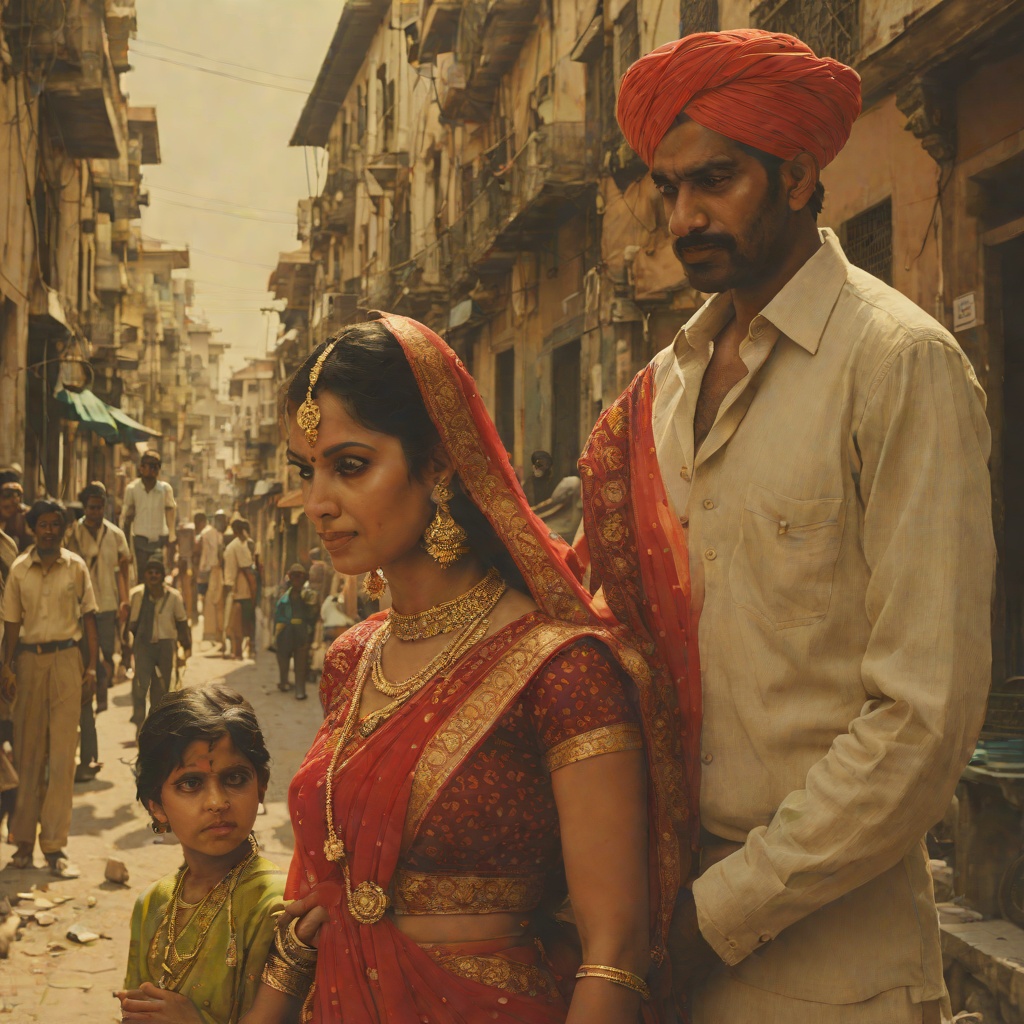
Geeta Gawli
Mafia Queens of MumbaiGeeta Gawli is the eldest daughter of Arun Gawli, the gangster who built his power base in the Byculla neighbourhood of Mumbai, and his wife Asha Gawli. She is the firstborn of the couple's five children, followed by Mahesh, Yogita, Yogesh and Asmita. Her significance in the story of the Mumbai underworld lies not in any criminal act of her own, but in her role as the public, electoral face of her father's political enterprise. In 2002, she became one of the first two corporators elected to the Brihanmumbai Municipal Corporation under the banner of the Akhil Bharatiya Sena, the party her father had founded five years earlier. This made her a pioneer in a family project that sought to translate the coercive power of the mafia into the legitimacy of democratic office, a project in which the women of the Gawli household played the leading public roles.
Family Background and the Rise of the Gawli Household
Geeta's parents came together under circumstances that defied the communal norms of their world. Her father, Arun, was a Hindu Maharashtrian who had already established himself as a gangster when he met seventeen-year-old Zubeida Mujawar, a Muslim woman who also lived in Byculla. Zubeida's marriage had already been arranged with a boy from within the Muslim community, but when Arun asked her to marry him, she accepted happily. The alliance was opposed by Arun's associates, including his old friend and schoolmate Rama Naik and another goon, Babu Reshim, on the grounds that the couple came from different communities. Arun refused to budge, and Zubeida converted to Hinduism and changed her name to Asha. In her, Arun found a dependable aide who would run his household at Dagdi Chawl in Byculla. Geeta was born into this household, the first of five children, and grew up as her mother initially stayed away from her father's criminal activities, raising and educating the children while watching anxiously from a distance as Arun indulged in the bloody battles of the mafiosi.
Entry into Electoral Politics
The family's turn toward politics began in the mid-1990s. In 1996, when Arun was locked up in the Kolhapur jail serving time under the Terrorist and Disruptive Activities Act, he mentioned to a visiting journalist his aspirations to join politics, giving as his reason the desire to save himself from a police encounter. The previous year, Asha had stood for the civic corporation elections, hoping her political standing would help her husband, but she had lost terribly. After this defeat, she shifted her focus to her husband's political career, and in 1997, with her encouragement and support, Arun started the Akhil Bharatiya Sena. While he was the president of the party, Asha headed its women's wing, which was used as a shield for the don against arrests and police encounters. A group of women would constantly surround Arun every time he walked out of Dagdi Chawl, a strategy that other dons in the underworld made fun of but which worked, as the cops could neither trace him in the crowd nor get violent with the women. It was into this political apparatus that Geeta stepped in 2002, when the Akhil Bharatiya Sena contested the Brihanmumbai Municipal Corporation elections for the first time. In that first attempt at entering the city's civic body, two corporators were elected: Geeta herself and Sunil Ghate, a one-time contract killer. Geeta's election marked the moment when the Gawli family's political project gained its first concrete institutional foothold, achieved not by the patriarch but by his eldest daughter.
Campaigning for the Father
Geeta's most sustained political work came during her father's legal troubles in the late 2000s. A couple of years before the Legislative Assembly elections of 2009, Arun Gawli was again put behind bars, this time being tried under the Maharashtra Control of Organised Crime Act. Asha did not give up. She filed his nomination papers for him, and along with her daughter Geeta, took it upon herself to campaign for him. A pre-election report in The Asian Age by Jigna Vora mentioned how Agni, an NGO, had rated Arun the most competent MLA during his term, and it had been Asha who had worked in the constituency on her husband's behalf while he spent most of his time as an MLA in jail. Geeta joined her mother in this effort, campaigning for a father who was largely absent from the constituency and from the Assembly sessions. The campaign spent money from the gang's resources to ensure that people were happy with her husband, but the family did not stop to think about one crucial aspect: Arun's own absence. His lack of attendance in the Assembly session had not gone unnoticed by political observers, and the people of his constituency voted against him. Arun failed to clinch the MLA post, and the family's political ambitions suffered a significant setback.
Role in the Family's Survival Strategy
Geeta's political activity must be understood within the larger strategy of survival that her mother devised for the family. Asha Gawli's management and supervision of Arun's political party had borne fruit in 2004 when her husband was elected the MLA from the Byculla constituency, and Geeta's own election as a corporator in 2002 was part of the same design. The women's wing of the Akhil Bharatiya Sena, which Asha headed, was used as a shield for the don against arrests and police encounters, and the strategy of surrounding Arun with women whenever he stepped out of Dagdi Chawl was one that other dons mocked but which proved effective. Geeta, as her mother's companion in the 2009 campaign, embodied this same logic: it was the women of the family who went out into the public sphere, who canvassed for elections, who made the rounds of the courts for legal battles, and who staged dharnas outside police stations and ministers' offices, while Arun rarely stepped out of his fortress. The family's political project was thus carried forward by its women, with Geeta serving as a younger generation's contribution to a strategy that kept the patriarch safe from the police encounters that killed other top dons like Amar Naik, Sada Pawle and Nari Khan. Even after the 2009 electoral defeat, the family's attitude remained one of defiance, with Asha declaring that the very fact that Arun was safe and unharmed by police forces, even after being tried under several stringent laws, still made her a clear winner. Geeta's role in this family project was that of the dutiful daughter who lent her name and her presence to the electoral ambitions of a father whose freedom depended on the political cover his women could provide.